

CodyCross: Crossword Puzzles
Fanatee, Inc.
I approached CodyCross: Crossword Puzzles expecting a familiar word game, but its real appeal is the way it turns short puzzle sessions into a gentle daily routine. Developed by Fanatee, Inc., this free word game combines crossword-style clues with a broader progression structure, making it feel less like a newspaper puzzle you finish once and more like a collection you return to over time. I found it easy to begin, but deciding whether it is right for you depends on what you want from a word game: relaxed entertainment, vocabulary practice, a demanding test of knowledge, or a completely uninterrupted experience.
The game is available for everyone and supports devices running Android 7.0 or later. It has grown into a very widely used title, with over 100 million installs and a 4.7 average from around 1.5 million ratings. Those figures do not automatically make it the best crossword app for every player, but they do reflect how accessible its basic idea is. I can recommend it most confidently to people who enjoy clues in small portions and like having a sense of progress between puzzles.
How I Decided Whether CodyCross Is Worth Your Time
The first question is what kind of word challenge you want
Traditional crossword fans often care about layered clues, clever wording, regional knowledge, and a satisfying level of resistance. CodyCross approaches the format in a friendlier way. You solve words inside a grid, but the experience is organized so that you can make progress without needing to sit down for a long, concentrated session. That makes it a better match for casual play than for someone searching for a strict newspaper-style crossword every morning.
Related News

CodyCross: Crossword Puzzles - A Journey Through Words and Worlds

Coloring Games: A Digital Canvas for Mindful Creativity

Hero Wars: Alliance Shows What Mobile RPG Players Expect Now
My first decision criterion was therefore difficulty. If you want an accessible introduction to crossword mechanics, this game is welcoming. Clues generally encourage you to keep trying rather than making every mistake feel like a dead end. If you are already an expert solver and want consistently obscure references or highly cryptic construction, you may find the early experience too forgiving. The game is more about maintaining momentum than proving that you can defeat an especially severe puzzle.
The second criterion was session length. I like word games that work when I have only a few minutes, and this one fits that situation well. I can open it while waiting for an appointment, solve a handful of entries, and stop without feeling that I abandoned a long match. That is different from a large crossword that demands a clear block of time or from a competitive word game where leaving early feels disruptive.
Related News

Why WhatsApp Messenger Still Makes Everyday Communication Feel Easy

Jurassic World: The Game Is the Better Dino Tycoon for Strategic Players

Threads in Real Life: Who Should Join, Lurk, or Leave

How SHEIN Turned Shopping Into an Endless Content Feed

How to Make Fortnite Feel Smarter on Mobile

Should You Switch to Microsoft Outlook on Mobile?
The themed structure changes how the clues feel
A useful detail is that the crossword grids are not simply random collections of unrelated answers. The game gives the solving experience a sense of direction through its themes and progression. I found that helpful when a single clue was vague: the surrounding answers and the general subject could narrow the possibilities. This creates a small reasoning loop. You are not only asking, “What word fits this clue?” You are also asking, “What kind of answer belongs with the rest of this group?”
That structure is one of the less obvious reasons the game feels approachable. A standard crossword can leave you staring at an isolated clue with no context. Here, solving easier entries can provide letters that make the harder ones manageable. My practical tip is to avoid spending too long on the first difficult clue you see. Fill the answers you recognize, use the crossing letters to reshape your guesses, and return to the stubborn clue later. The game is more enjoyable when you treat the grid as a connected problem rather than a list of independent questions.
This also makes it suitable for mixed-skill households. A younger player or a casual adult can contribute the obvious answers, while a more experienced solver can handle the less familiar clues. Since the content rating is Everyone, it is a reasonable choice for general family use, although individual vocabulary and subject knowledge will still determine how comfortable each player feels.
Gallery
What I look for before spending money
The game is free to start, which matters because you can test its style without committing to a purchase. It includes in-app purchases ranging from $0.99 to $84.99 per item. I would not decide based on the existence of purchases alone; the more important question is whether you are comfortable treating optional assistance or extras as a possible part of the experience. For me, the best approach is to play naturally first and avoid turning every difficult clue into a reason to spend.
There is a psychological trade-off in any puzzle game with optional purchases. A hint can preserve the flow of a session, especially when you are stuck on one answer and do not want to abandon the whole grid. At the same time, using help too quickly can remove the small satisfaction that comes from recognizing the answer yourself. I recommend setting a personal rule before playing: try crossing letters, revisit the clue, and only then consider assistance. That keeps the game feeling like a word challenge instead of a sequence of prompts to bypass.
Where CodyCross is especially strong
The strongest part of the experience is its balance between structure and relaxation. I always know what I am doing, but I rarely feel rushed. The crossword format gives the session a clear purpose, while the broader progression gives me a reason to return after finishing one grid. This is a better fit for winding down than a timed word battle, and it is more directed than a simple anagram generator.
I also appreciate how the crossing letters create a natural hint system without immediately revealing the answer. When I solve one entry, I am often helping myself with two or three others. That makes progress feel earned. A generic hint button may tell you something directly, but the grid itself teaches you to use partial information. For anyone trying to improve at crosswords, this is a useful habit: start with certainty, build a letter pattern, and let the pattern reduce the number of plausible answers.
Another advantage is the low barrier to entry. You do not need to learn a complicated control scheme, remember a large set of rules, or compete against another person. The central activity is reading a clue and placing a word. That simplicity is valuable for players who want mental stimulation without the pressure associated with ranked games or live matches.
A realistic everyday use case
Imagine that I have a short train ride after work. I do not want to begin a story-driven game because I may need to stop suddenly, and I do not want a competitive match that depends on a stable block of attention. I can open CodyCross, complete several clues, pause when I reach my destination, and return later without losing the basic context. The session has enough substance to feel worthwhile, but it does not demand a full evening.
It also works as a small break from passive scrolling. Instead of moving through unrelated posts, I am exercising recall, spelling, and association for a few minutes. I would not describe it as a replacement for serious study, but it can make idle time more active. If you are trying to build a habit of doing a short mental exercise each day, the progression is more motivating than an empty puzzle list.
Where the usual alternatives may fit better
The main alternative is a conventional crossword app modeled closely on a newspaper. Choose that category if you want denser clue writing, a more formal puzzle culture, or a stronger feeling that each grid is a carefully constructed test. CodyCross is more inviting, but that friendliness can feel less rewarding to an expert who wants to wrestle with ambiguity and wordplay.
A second alternative is a competitive word game. Those games are better when your motivation comes from speed, head-to-head pressure, or measuring yourself against another player. CodyCross is primarily a personal progression experience, so it will not deliver the same social tension. I prefer it when I want control over the pace, but I would choose a multiplayer word title when I am specifically looking for interaction.
There is also a difference between this game and a pure vocabulary trainer. A dedicated learning app may offer deliberate repetition, definitions, or exercises designed around retention. CodyCross can expose you to unfamiliar words and encourage recall, but I would not use it as my only language-learning tool. Its purpose is entertainment first, with mental exercise built into the solving process.
Finally, players who dislike hints, purchase prompts, or any form of monetization should think carefully before choosing a free-to-start puzzle game. A paid crossword product may be a better fit if your priority is a single, clearly defined purchase and a more traditional reading experience. I cannot promise that CodyCross will satisfy someone who wants every part of the game to feel like a premium print crossword.
Small habits that make the game more enjoyable
My first practical suggestion is to solve by confidence rather than by screen order. Enter the answers you know immediately, even if they are short or seem less important. The resulting letters are more valuable than repeatedly rereading a difficult clue with no new information. This is a general crossword method, but CodyCross makes it particularly effective because the connected grid lets easy answers unlock harder ones.
My second suggestion is to use the theme as a reasoning tool, not just decoration. If several possible words fit the clue length, consider which one belongs with the subject of the puzzle. That extra filter often prevents a plausible but incorrect guess. It also makes the game feel more like association and less like random vocabulary recall.
Third, I recommend treating a stuck clue as a pause point rather than a failure. Move elsewhere in the grid, collect more letters, and return with fresh context. This avoids wasting hints and keeps the session calm. If you are playing with someone else, saying the clue aloud can help too; another person may notice a connection that is invisible when you are focused on the letter pattern.
A fourth useful habit is to separate entertainment sessions from improvement sessions. When I want to relax, I solve freely and accept that I may need help. When I want to sharpen my crossword ability, I delay assistance and study why a clue became solvable after the crossings appeared. That distinction prevents the game from becoming frustrating while still giving it educational value.
Technical expectations and long-term fit
The current version is 2.7.0, and the minimum operating system requirement is Android 7.0. That makes the compatibility threshold fairly approachable for people using older supported Android devices. On iOS, the practical question is less about the title’s concept and more about whether your device can run the version available through its store. In either case, I would check the current store page before installing on an especially old phone or tablet.
Because this is a progression-based game, long-term enjoyment depends on whether you like returning to the same style of challenge. The core activity does not radically change into a different genre. If you enjoy clue solving, themes, and gradual completion, that consistency is a strength. If you need constant mechanical variety, you may eventually prefer a broader puzzle collection containing logic, numbers, anagrams, and visual challenges alongside crosswords.
The large audience and strong average rating suggest that the basic formula works for many people, but they should not override your preferences. A popular casual game can still be wrong for a dedicated crossword purist. I would use the free entry point to make that decision personally: play long enough to see whether the accessible clue style feels satisfying or merely easy.
My recommendation after weighing the trade-offs
I recommend CodyCross to casual crossword players, families looking for a simple shared word activity, and anyone who wants a low-pressure game for short breaks. It is particularly good if you enjoy seeing a small amount of progress each time you play and like using crossing letters to work your way through uncertainty. The combination of themed grids and gradual progression gives the familiar crossword format a more welcoming rhythm.
I would be more cautious about recommending it to expert solvers who want consistently difficult, cryptic, or newspaper-style puzzles. I would also point competitive players toward a multiplayer word game, and serious language learners toward a dedicated vocabulary tool. Those are not criticisms of CodyCross; they are situations where a different category better matches the goal.
For me, the deciding factor is that it respects short sessions. I can play without arranging my day around it, yet the clues still give me something to think about. The free price makes trying it straightforward, while the optional purchase range means I would keep my spending deliberate rather than automatic. If you want a friendly word game that turns crossword solving into an ongoing routine, this is an easy one to try. If you want a demanding test of advanced crossword craft, start elsewhere.
Overall, Fanatee, Inc. has made a game that succeeds through accessibility rather than intimidation. Its best moments come when a few certain answers gradually reveal the one clue that seemed impossible. The key trade-off is simple: you gain a relaxed, structured crossword journey, but you give up some of the severity and purity that traditional crossword specialists may prefer. For the right player, that is exactly why it works.
FAQs for CodyCross: Crossword Puzzles
What is CodyCross: Crossword Puzzles?
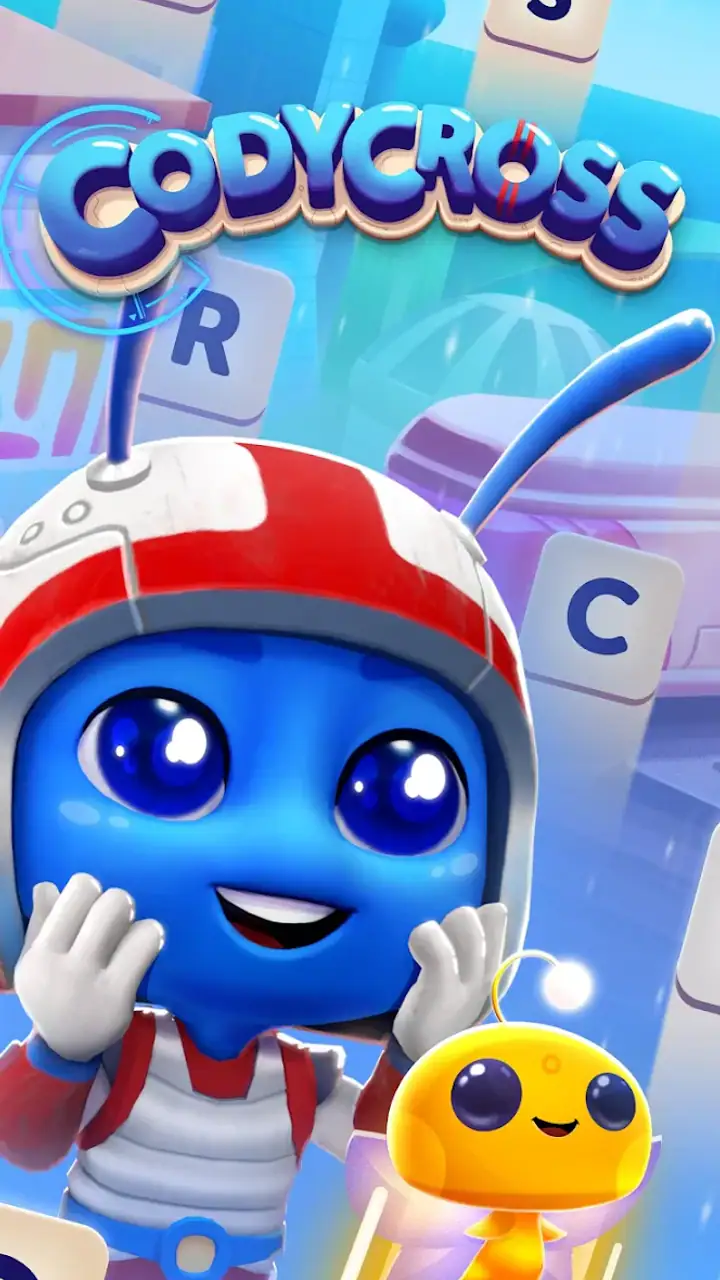
CodyCross: Crossword Puzzles is an engaging word puzzle game available on both Android and iOS platforms. It combines traditional crossword puzzle gameplay with a unique twist, offering themed puzzles and an immersive storyline. Players help Cody, a friendly alien, explore various worlds by solving crossword clues.
Is CodyCross free to download and play?
CodyCross is free to download and play, but it offers in-app purchases. Players can buy packs or subscribe to premium versions to unlock additional features, such as more puzzle packs and an ad-free experience. This allows users to enjoy more content and uninterrupted gameplay.
Does CodyCross require an internet connection?
CodyCross requires an internet connection for downloading new levels and accessing some features. However, once a puzzle is downloaded, it can often be played offline. Regular updates and new content may also require connectivity to ensure the latest version of the game is installed.
What are the system requirements for CodyCross?
CodyCross is compatible with most modern Android and iOS devices. It typically requires Android 5.0 or later, and iOS 10.0 or later, ensuring smooth performance. It’s advisable to have sufficient storage space for the app and additional content, especially if you plan to download multiple puzzle packs.
Are there any accessibility features in CodyCross?
CodyCross offers several accessibility features to enhance the gaming experience for all users. These include adjustable text sizes and high-contrast modes to aid visibility. The game’s intuitive design also ensures that navigation is straightforward, catering to a broad range of players, including those with specific needs.
Pros
- Engaging and educational gameplay.
- Visually appealing interface.
- Regular updates with new puzzles.
- Offline play available.
- Wide range of topics covered.
Cons
- In-app purchases can be pricey.
- Ads are frequent in free version.
- Limited hints without purchase.
- Some puzzles can be repetitive.
- Requires internet for new content.


